November 10, 2008, 8:04 pm 4 Nov 2008 9:33 PM Venona 2008 activities begin
The annual Venona puzzle activities started with a real geocache this year. It was a cipher and was solved by the GBA master puzzlers. Since Dan and I were close to the cache we headed out to retrieve the hint contained in it, and also claimed FTF on it.
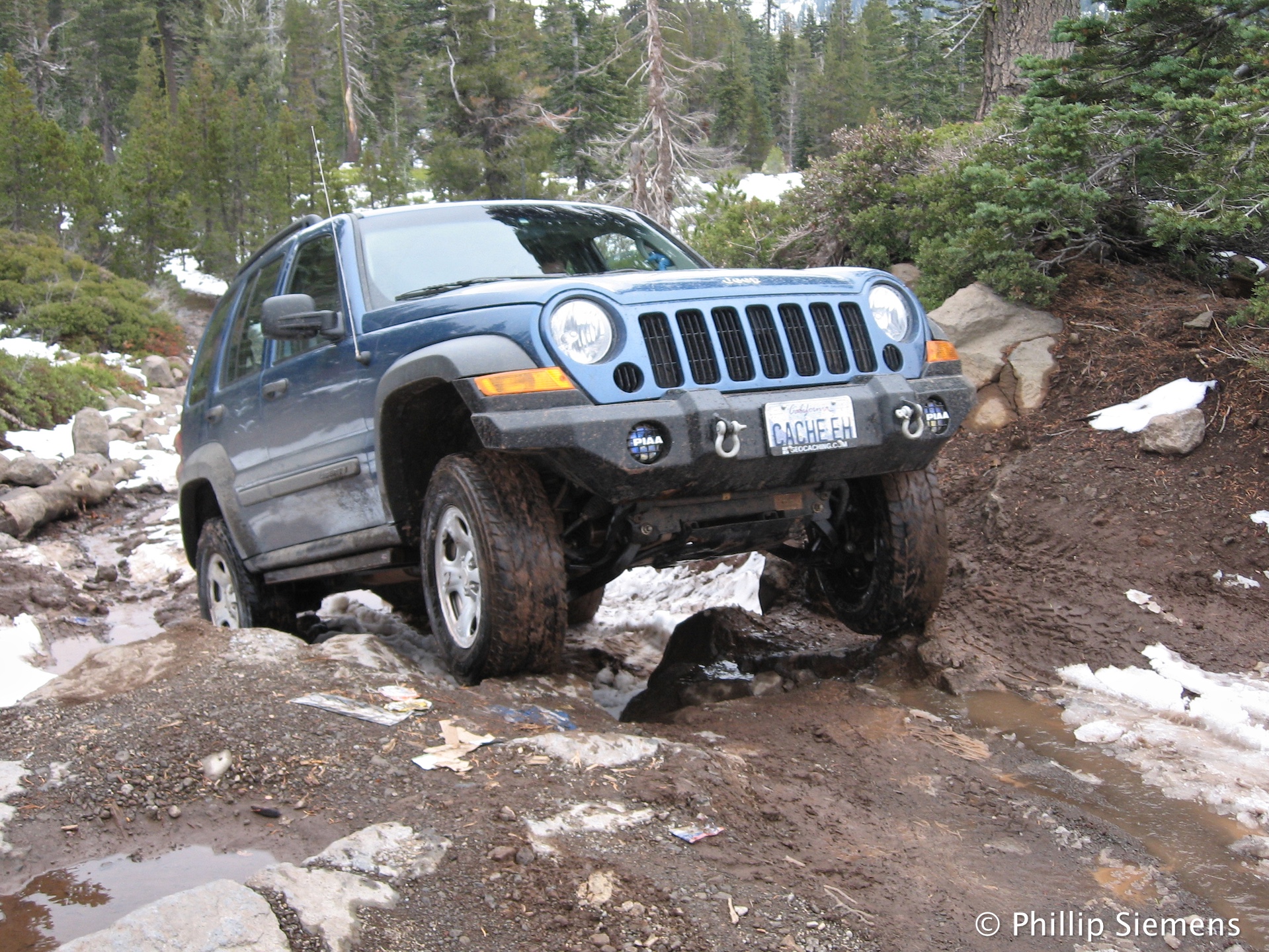
9 Nov 2008 9:33 PM High Lakes 4×4 for a fizzy square
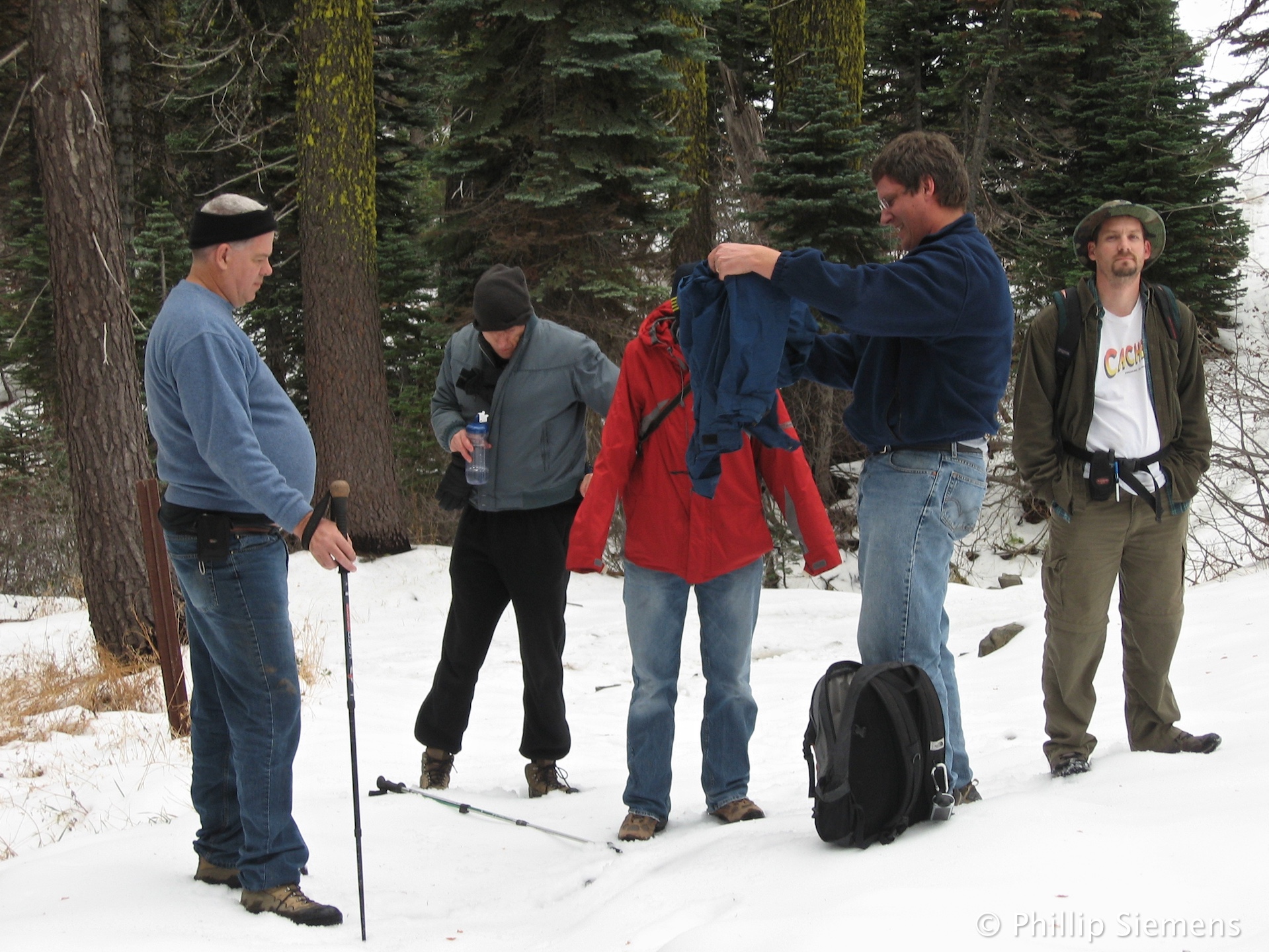
 Rock crawling in the slush I rode along with mjp303 to the High Lakes OHV area east of Chico to get High Lakes OHV Area, Morris Lake Overlook. Snow, mud, water, big rocks—all made for quite an adventure. It wasn’t prudent to drive all the way, so we walked the last third of a mile. I’m really disappointed that we didn’t go to High Lakes OHV Area, Long Lake, since we were within a mile. If I go back for this one, I can probably get within 2 or 3 miles with my Ridgeliine, if I’m careful.
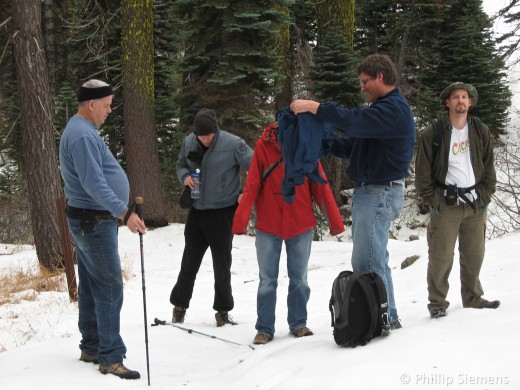 The High Lakes caching crew
November 7, 2008, 3:27 pm I just listened to a TEDtalks presentation by Bjørn Lomborg on “Our priorities for saving the world.” While he holds highly controversial positions related to global problems, what I found most interesting was his discussion of how to think about setting priorities for solving problems.
Of course, one way of problem solving is to ask, “What is our biggest problem?” Then, we make solving that problem our priority. Lomborg suggests another approach: since we are almost always resource limited, prioritize on the basis of what will give us the best results for the resources we have available. I find it interesting to contemplate applying this idea not only to global issues, but to personal priorities, church priorities, and local government priorities.
Lomborg’s example (highly controversial) was that the biggest global problem facing us is climate change, but that we could get a far higher return (in terms of lives saved/quality of life) by solving AIDS. I think there are too many unknowns to be sure of his conclusions, but I am interested in thinking through setting priorities by carefully considering not only the biggest problem, but the most cost-effective solution as well.
November 6, 2008, 9:42 am Be happy! That’s it. That’s all there is to it. Live happily and you could add several years to your longevity. So says Professor Ruut Veenhoven of Erasmus University in a research article published by the Journal of Happiness Studies.
Correlating happiness and longevity requires long-term studies. Veenhoven used data from 30 different research studies and concluded that while happiness does not correlate to longevity for those who are ill, it significantly correlates with longevity in those who are well. In other words, being happy while suffering from cancer does not help you live longer, according to Veenhoven. However, a life of happiness when you are well appears to protect you from early contraction of serious diseases, to the point of adding up to 10 years to your longevity.
Veenhoven rightly concludes that given these results, society should be proactive in considering happiness as a contributor to a healthy life. But what leads to happpiness? Turns out, the research is less clear on this topic.
I believe an important contributor to happiness is a sense that you have value in this life. Robert S. McGee discusses this in his book The Search for Significance. Guy Kawasaki puts it simply, “Make Meaning.” While his talk is directed at businesses, I believe it applies equally to our individual lives. Finally, the Bible is full of instruction on how to live happily in relation to God and others. Here’s a sample.
Live in peace with each other. And we urge you, brothers, warn those who are idle, encourage the timid, help the weak, be patient with everyone. Make sure that nobody pays back wrong for wrong, but always try to be kind to each other and to everyone else.
Be joyful always; pray continually; give thanks in all circumstances, for this is God’s will for you in Christ Jesus.
Do not put out the Spirit’s fire; do not treat prophecies with contempt. Test everything. Hold on to the good. Avoid every kind of evil.
1 Thessalonians 5:13–22
|
Consider this:“Let no debt remain outstanding, except the continuing debt to love one another, for he who loves his fellowman has fulfilled the law.” Romans 13:8 |